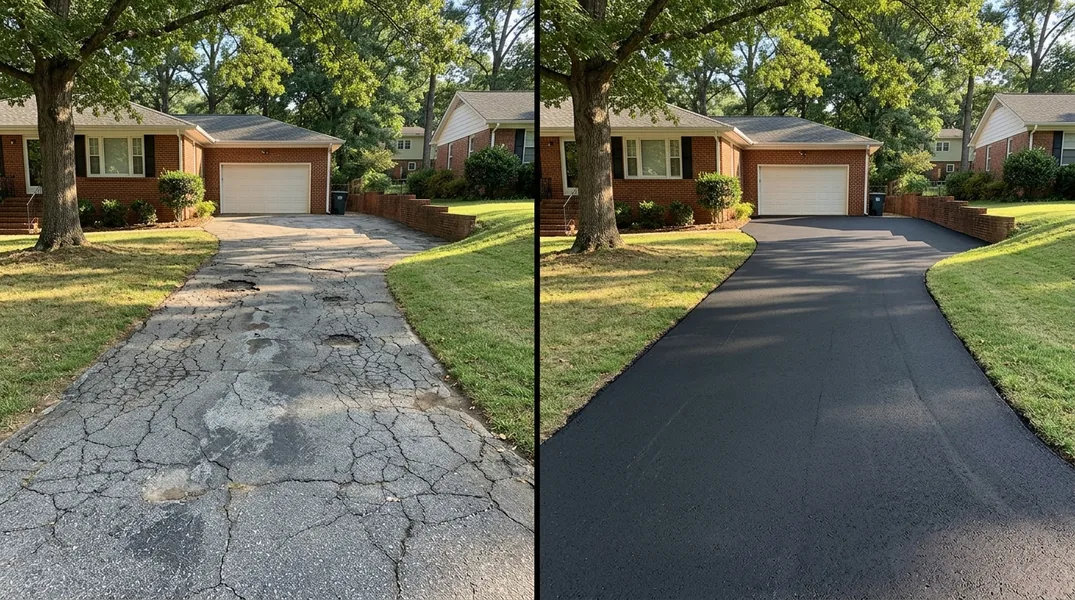
Understanding Driveway Cracks: The First Step
Your driveway is one of the hardest-working surfaces on your property. It endures daily traffic, temperature fluctuations, and Raleigh's humid climate. Over time, cracks inevitably appear. But not all cracks are created equal, and understanding what you're looking at is the first step toward making a smart decision about repair versus replacement.
Cracks fall into a few main categories. Hairline cracks are thin, surface-level fractures that typically appear within the first year of installation. These are usually cosmetic and don't necessarily indicate structural failure. Alligator cracks, named for their resemblance to alligator skin, form a pattern of interconnected fractures and signal deeper problems with the asphalt base or subgrade. Linear cracks run in straight lines across your driveway and often develop due to settling or thermal stress. Finally, edge cracks appear along the perimeter of your driveway and often result from inadequate support at the edges. Each type tells a story about what's happening beneath the surface.
How Long for Asphalt to Cure: What New Driveways Need
If you've recently invested in Asphalt Driveway Paving & Installation, understanding the curing process is essential for protecting your investment. New asphalt doesn't reach full strength immediately after installation. The material undergoes a curing process that affects how you can use your driveway during those critical first weeks.
How long for asphalt to cure depends on several factors, including temperature, humidity, and the thickness of the asphalt layer. In ideal conditions, asphalt typically cures enough for light foot traffic within 48 hours. However, how long before you can drive on new asphalt is a more important question for most homeowners. You should wait at least 48 to 72 hours before driving regular vehicles on a newly paved driveway, though some contractors recommend waiting up to a week for optimal strength. During hot weather in Raleigh, curing may accelerate, but cooler temperatures slow the process considerably. Full curing, where the asphalt reaches maximum hardness and flexibility, typically takes 6 to 12 months. During this extended curing period, avoid parking heavy vehicles in the same spot for prolonged periods, and be mindful of turning your steering wheel while stationary, as this can create permanent marks in the softening asphalt.
New Asphalt Driveway Care: Maximizing Your Investment
Proper maintenance during and after the curing phase directly impacts how long your driveway lasts. New asphalt driveway care begins the moment installation is complete. During the first few weeks, keep the surface clean and dry. Avoid parking heavy vehicles on the same spot, and don't allow standing water to pool on the surface. These simple precautions help ensure the asphalt cures evenly and develops the strength it needs for years of reliable service.
Once your driveway has fully cured, a consistent maintenance routine becomes your best defense against premature deterioration. Sweep debris regularly to prevent organic material from breaking down the asphalt binder. Seal cracks as soon as they appear to prevent water from infiltrating the base layer. Water is asphalt's primary enemy because it weakens the supporting materials underneath and accelerates crack growth. How often to seal driveway is a question many homeowners ask, and the answer depends on your climate and traffic level. In Raleigh's humid subtropical climate, you should consider a professional sealcoat every two to three years. This protective layer shields the asphalt from UV rays, oxidation, and moisture penetration. Regular sealcoating can extend your driveway's life by five to ten years compared to an unmaintained surface.
When to Repair: Addressing Small Problems Before They Grow
Most driveway problems start small and grow larger if ignored. Driveway Repair is often the most cost-effective solution when damage is caught early. Hairline cracks and small linear cracks can be sealed with specialized asphalt crack filler. This process is relatively inexpensive and can prevent water from entering the base layer, where it causes exponentially greater damage. If you notice potholes or significant deterioration in localized areas, Pothole Repair & Asphalt Patching can restore the surface and prevent the damage from spreading.
The key to deciding whether repair makes sense is assessing the extent of the damage. If cracks cover less than 30 percent of your driveway's surface and are relatively shallow, repair is usually the right choice. If you're dealing with one or two isolated problem areas, targeted repairs can extend your driveway's life significantly. However, repairs are a temporary solution. Even well-executed patches eventually fail because they don't bond perfectly to the surrounding asphalt, and the underlying issues that caused the damage often persist. Think of repairs as buying time while you plan for a more permanent solution.
When to Replace: Recognizing Signs of Structural Failure
Replacement becomes necessary when damage is extensive or when your driveway has reached the end of its lifespan. A typical asphalt driveway lasts 15 to 20 years with proper maintenance, though some driveways deteriorate faster due to poor installation, inadequate base preparation, or harsh environmental conditions. If your driveway exhibits widespread alligator cracking, multiple potholes, significant rutting, or upheaval, replacement is likely your only option. Attempting to repair a structurally compromised driveway is like putting a band-aid on a broken bone; you're addressing the symptom, not the problem.
Asphalt Resurfacing & Overlay offers a middle-ground solution in some cases. If your driveway's base is still sound but the surface layer has deteriorated, resurfacing involves laying a new layer of asphalt over the existing surface. This approach costs less than complete replacement and can add another 8 to 15 years to your driveway's life. However, if the base layer is compromised, full replacement is necessary to ensure long-term durability. A professional inspection can determine whether your driveway is a candidate for resurfacing or requires complete replacement.
Getting Professional Help: Your Next Steps
Making the repair versus replace decision is easier with expert guidance. A professional asphalt contractor can assess the condition of your driveway, identify the underlying causes of damage, and recommend the most cost-effective solution. They'll evaluate factors like the age of your driveway, the extent of damage, the condition of the base layer, and your long-term plans for the property. This information helps you make an informed decision that aligns with your budget and goals.
If you're uncertain about your driveway's condition or need help deciding between repair and replacement, contact Raleigh Asphalt Paving today. Call us at (919) 746-7359 or visit our website to request a free estimate. Our experienced team serves homeowners throughout Raleigh and can provide honest, professional advice about the best course of action for your specific situation. Whether your driveway needs targeted repairs or a complete replacement, we're here to help you protect this important investment and keep your property looking its best for years to come.
Looking for a professional asphalt paving contractor in Raleigh? Raleigh Asphalt Paving responds fast for all your asphalt paving needs.
Get a Free Quote